The Best Blow Dry for Fine Hair That Won’t Fall Flat
Fine hair has a particular honesty to it. It shows everything — the good and the not-so-good — and it rarely holds a shape just because you’ve styled it into one.
So when someone says they want “a blow dry that lasts”, what they usually mean is: how do I stop it collapsing by lunchtime?
The answer isn’t more product or more heat. It’s structure — how the hair is built while it’s being dried, not how it’s finished at the end.
At House of Kingshott Hair Studio in Preston Park, fine hair is approached with restraint rather than force. The goal isn’t to inflate it. It’s to create support that doesn’t weigh it down.
In Summary:
The best blow dry for fine hair is one built on lightweight structure and root control, not heavy product or over-styling.
Why fine hair falls flat so easily
Fine hair doesn’t lack volume — it lacks internal resistance.
Each strand is lighter, so it responds quickly to gravity, humidity, and movement. That means any styling has to work with that behaviour rather than trying to override it.
Common reasons fine hair collapses quickly:
too much product at the root
large blow-dry sections
insufficient root lift during drying
heat applied without directional control
brushing the hair too early before it sets
In coastal environments like Brighton, this can be even more noticeable. Moisture in the air softens structure faster, especially around the crown.
In Summary:
Fine hair falls flat because it has less internal structure and is easily affected by weight, moisture, and poor root support.
The foundation: it starts before the blow dry
A good blow dry for fine hair begins in the wash basin.
The key isn’t over-conditioning. It’s controlled balance.
Fine hair needs enough softness to stay healthy, but not so much that it becomes slippery and unresponsive to styling. When the hair is too smooth at the root, it simply won’t hold lift.
This is why many professional stylists treat the root area differently — keeping it lighter so it can be shaped properly during drying.
At this stage, the goal is simple: create hair that is responsive, not heavy.
In Summary:
Fine hair needs balanced preparation — clean, light roots with enough condition to stay healthy but not so much that it loses grip.
The blow dry technique that actually holds
This is where everything changes.
The best blow dry for fine hair is not about volume in the traditional sense. It’s about controlled lift that doesn’t collapse under its own weight.
That comes from three key techniques:
1. Root direction
Hair must be lifted and directed away from the scalp during drying. If it’s smoothed downward too early, it locks into a flat position.
2. Small, controlled sections
Fine hair should never be rushed through large sections. Smaller sections allow tension to be consistent from root to ends, which is what builds shape.
3. Cooling in position
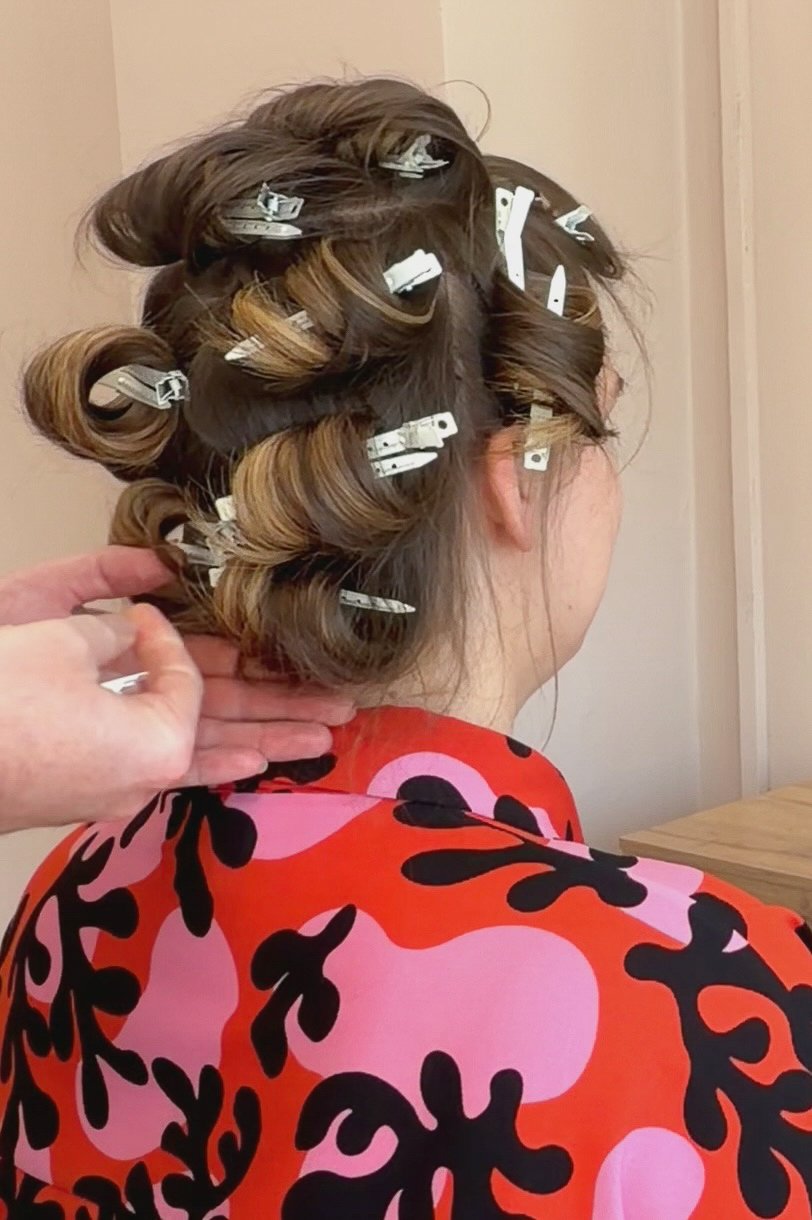
Once the hair is shaped with heat, it needs to set. This is where techniques like a Brighton blow-dry pin curl technique (pin-setting while the hair cools) can make a visible difference in longevity and lift.
Without that cooling stage, even the best styling tends to soften too quickly.
In Summary:
Fine hair holds best when it is lifted at the root, styled in small sections, and allowed to cool in shape before being released.
Why most “volume blow dries” fail on fine hair
The mistake is usually overcorrection.
Trying to force volume into fine hair often leads to:
too much product
overly large brushes
heavy heat concentration
and too much brushing after styling
The result might look big for a short moment, but it collapses quickly because the structure underneath isn’t stable.
Real volume in fine hair isn’t created by making it bigger. It’s created by making it hold its position.
That difference is subtle, but it’s everything.
In Summary:
Over-styling fine hair creates temporary volume, but without structure it collapses quickly.
The best blow dry shape for fine hair
Not all finishes behave the same on fine hair.
Some shapes naturally last longer because they support the hair’s structure rather than fight it.
The most reliable finishes tend to be:
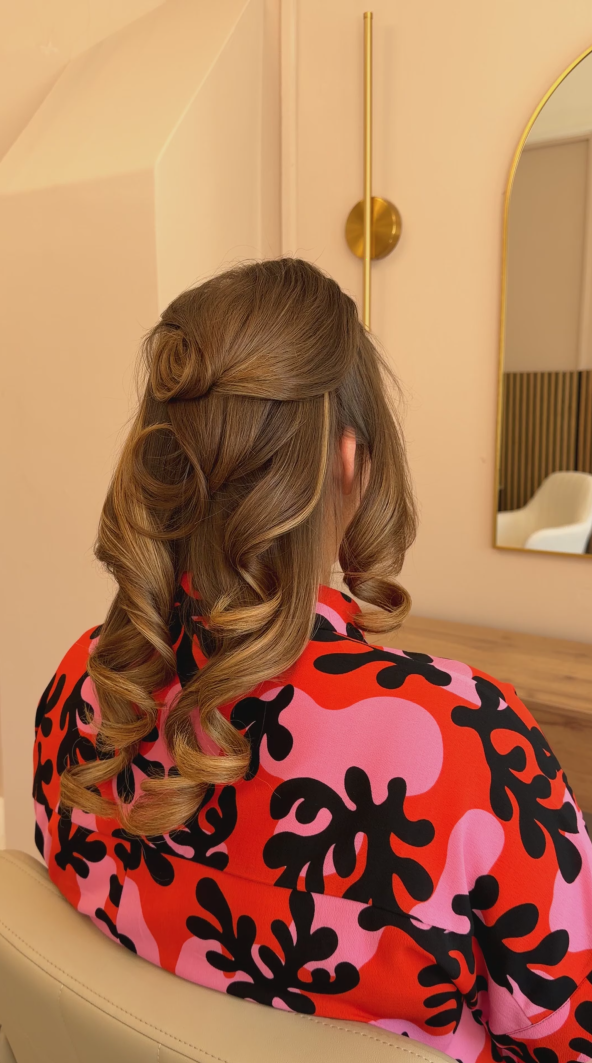
soft root lift with controlled movement through the ends
slightly rounded crown rather than flat smoothing
face-framing sections that are gently directed, not over-curled
a polished but flexible finish rather than rigid structure
A very “sleek” blow dry can look beautiful initially, but fine hair often loses grip faster when it’s overly smoothed.
Movement — when controlled properly — actually helps longevity.
In Summary:
Fine hair holds best in soft, structured shapes rather than overly sleek or heavily set finishes.
How long a good blow dry should last on fine hair
On average, a well-executed blow dry on fine hair will last 1–2 days with visible structure, sometimes longer depending on aftercare and environment.
After that, it usually softens rather than disappears entirely. The crown may drop first, while the ends retain movement.
The key expectation shift is this: fine hair will rarely hold “day one volume” for multiple days — but it can hold shape when it’s been properly set.
That’s the difference between a blow dry that feels like it’s gone, and one that simply relaxes.
In Summary:
Fine hair blow dries typically last 1–2 days in structure, gradually softening rather than fully collapsing.
What you can do after your blow dry
Maintenance is less about adding products and more about not undoing the structure.
A few small habits make a noticeable difference:
avoid heavy touching at the roots
don’t tie hair tightly on day one
let it cool fully before styling or tucking behind ears
use dry shampoo sparingly at the root if needed
sleep on a smooth pillowcase to reduce friction
In places like Hove, where coastal air can subtly soften styling, protecting the root area matters more than re-styling the lengths.
In Summary:
Fine hair holds better when the root area is left undisturbed and the style is allowed to settle naturally.
The salon reality: why fine hair behaves differently in professional hands
The difference isn’t just skill — it’s timing and control.
In a professional setting, every stage is adjusted in real time based on how the hair is responding. If it starts to drop, direction changes. If it’s too soft, sectioning adjusts. If it needs more lift, cooling is extended.
At House of Kingshott Hair Studio in Preston Park, Brighton, this responsiveness is what makes fine hair behave differently after a salon blow dry compared to at home.
It’s not about doing more. It’s about reacting more precisely.
In Summary:
Fine hair responds better in salon settings because styling is adjusted continuously based on how the hair behaves during the process.
FAQs
What is the best blow dry for fine hair?
A lightweight, structured blow dry with root lift, small sections, and controlled cooling works best.
Why does my fine hair go flat after a blow dry?
Usually due to lack of root direction, heavy product use, or insufficient setting time while the hair cools.
Can fine hair hold a blow dry for two days?
Yes, but typically in a softened form after the first day rather than full volume.
Should fine hair use less product during a blow dry?
Yes. Fine hair benefits from minimal, targeted product use rather than heavy application.
Is a round brush good for fine hair?
Yes, but only when used with controlled tension and appropriate section size — otherwise it can overwhelm the hair.