What Happens During a Professional Blow Dry Appointment?
Most people walk into a blow dry appointment thinking it’s going to be fairly straightforward — wash, dry, style, done.
And yes, that’s the structure on paper. But the experience in reality is a bit more layered than that, especially when the goal is a finish that holds its shape rather than just looks good for a moment.
At House of Kingshott Hair Studio in Preston Park, a blow dry is approached less like a routine service and more like a sequence of decisions about how the hair should behave once it leaves the chair.
In Summary:
A professional blow dry is a structured styling process, not just drying hair — each stage influences how the final result looks and lasts.
The consultation happens before the styling begins
Even if it’s brief, this is where the outcome is quietly decided.
This is when we look at:
how your hair naturally falls
how it behaves when it’s wet vs dry
how much volume it can realistically hold
and what kind of finish will actually last for your lifestyle
Most clients don’t realise how much of the result is already being shaped at this point.
For example, fine hair that wants “big volume” needs a very different approach to thick hair that wants “smooth but not flat”. Those decisions change everything that follows.
This is also where we consider factors like humidity in Brighton, which can subtly affect how much structure we build into the style.
In Summary:
The consultation quietly determines the direction of the blow dry — even before the hair is washed.
Washing and preparation set the foundation
The wash stage isn’t just about cleanliness. It’s about control.
How the hair is shampooed, how much moisture is left in it, and how it’s prepped all influence how it responds to styling.
Hair that is too soft and over-conditioned can lose grip and volume quickly. Hair that is under-prepped can feel resistant and harder to shape.
This is why professional blow dries often feel different from at-home attempts — the preparation is intentional rather than automatic.
Conditioner placement is also more controlled, usually focused on mid-lengths and ends, so the root area remains responsive during styling.
In Summary:
Preparation is about balancing softness and structure so the hair can be shaped properly during drying.
Sectioning is where the structure is built
Once the hair is ready, sectioning begins — and this is where the real architecture of the blow dry is created.
Large, unstructured sections at this stage usually lead to a quicker finish but less control. Smaller, intentional sections allow for better tension, smoother cuticle alignment, and more predictable movement once the hair is dry.
This is also where the shape of the blow dry is decided — whether it’s soft and natural, or more structured with visible volume at the root.
Nothing visible looks dramatic at this point, but it’s one of the most important parts of the entire appointment.
In Summary:
Sectioning determines control, smoothness, and how well the final style will hold its shape.
Drying and brushing shape the final movement
This is the part most people associate with a blow dry — but it’s actually just one stage of a longer process.
As the hair is dried, tension is applied through the brush to guide the hair into its intended shape. The direction of airflow matters just as much as the heat itself.
If hair is dried upwards at the root, it builds lift. If it’s smoothed downwards, it becomes sleeker and flatter. Every movement during this stage has a consequence later.
This is also where stylist technique really shows — not in speed, but in control.
In Summary:
Blow drying is about directional control and tension, not just heat and brushing.
The cooling stage is where the style “sets”
Once the hair is dry, the process isn’t finished — it’s paused.
Hair needs to cool in its shaped position to retain memory. If it’s disturbed too early, the structure softens and loses longevity.
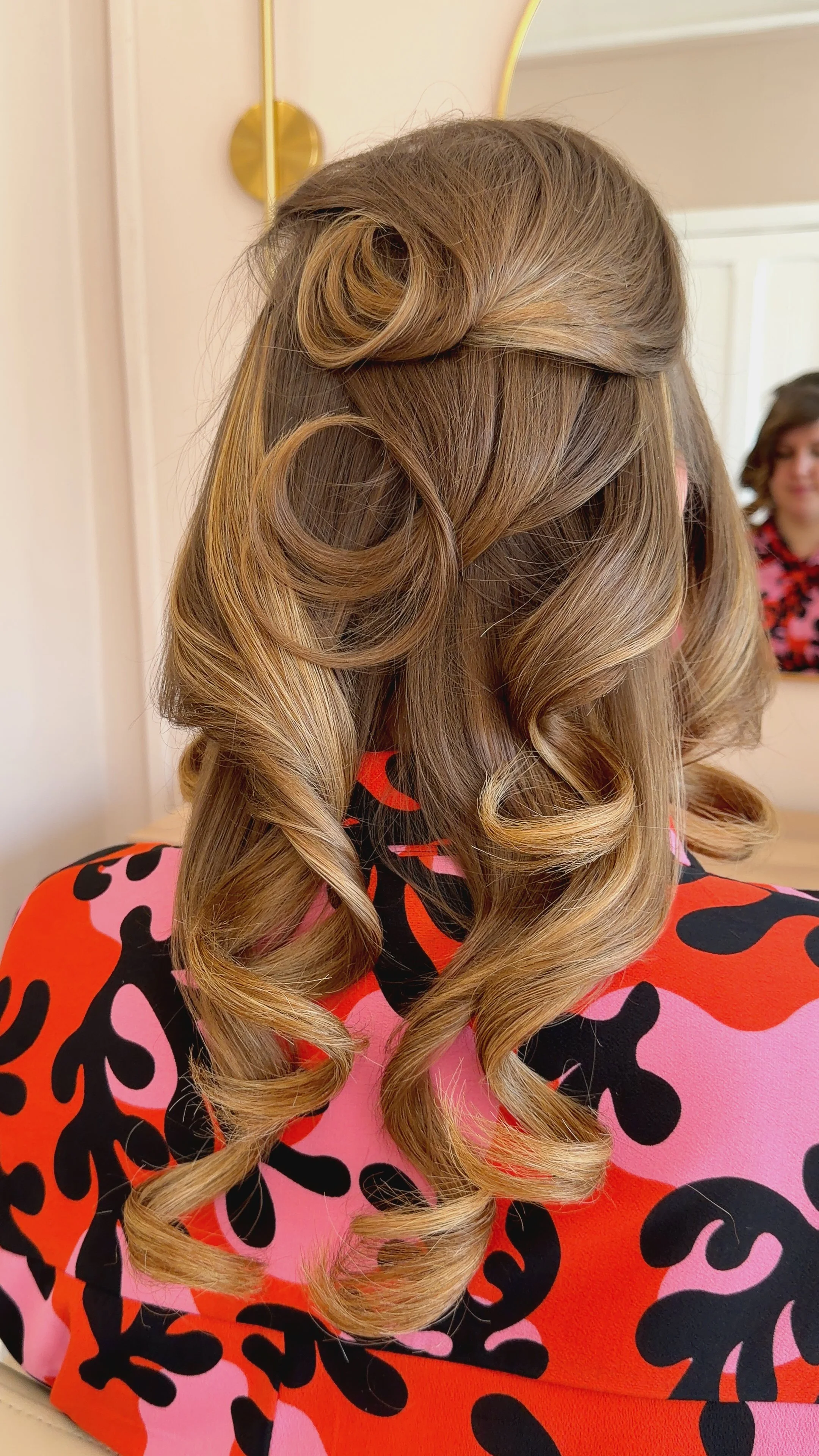
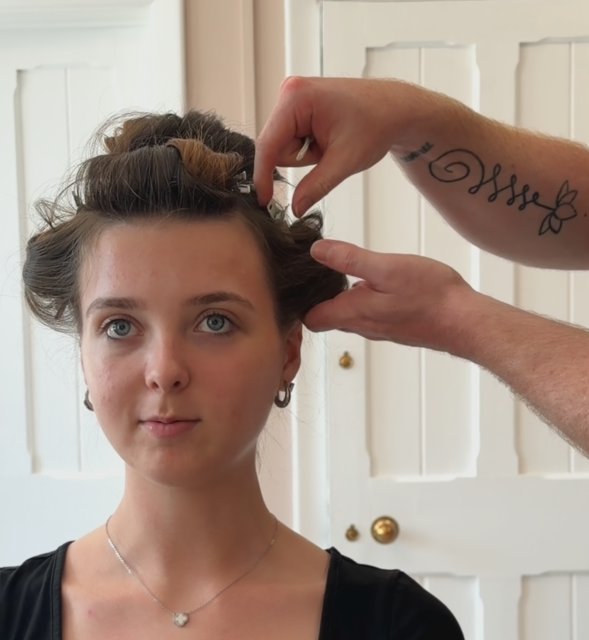
This is where techniques like pin-setting or a Brighton blow-dry pin curl technique can make a noticeable difference. Sections are held in place while they cool so the shape locks in rather than collapsing.
This stage is quiet, but it’s often what determines whether the blow dry lasts a day or carries into the next.
In Summary:
Cooling is what sets the style in place — without it, even a well-dried blow dry can lose structure quickly.
Finishing is about refinement, not volume
Once the hair has set, it’s gently released and refined.
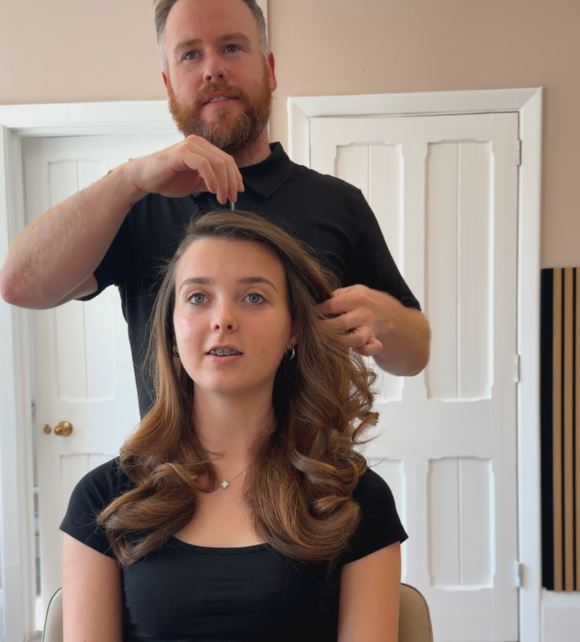
This is where movement is softened, ends are adjusted, and the overall shape is balanced. It’s not about adding more styling — it’s about making sure everything falls naturally.
Sometimes a small adjustment at this stage changes the entire feel of the blow dry. A slight lift at the crown, or softening around the face frame, can shift the balance from “styled” to “effortless”.
At this point, the hair should feel like it already knows how it wants to sit.
In Summary:
Finishing is subtle refinement — shaping the final look rather than adding more to it.
What you actually leave the salon with
A finished blow dry is more than a hairstyle in the mirror.
It’s a structure that behaves differently depending on movement, weather, and time.
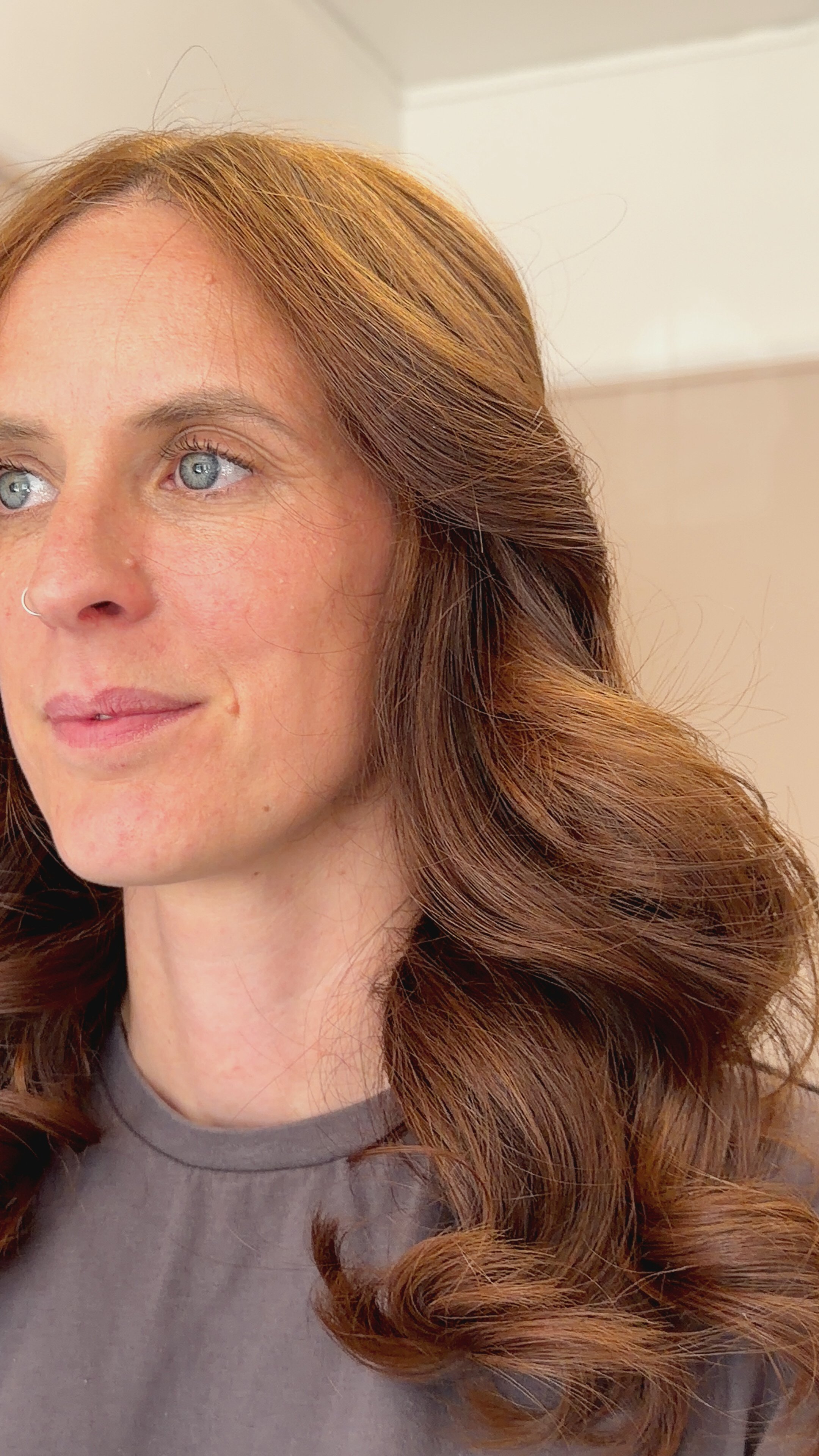
In areas like Brighton and surrounding Hove, the style will naturally soften over time, but a well-executed blow dry should still hold its intention — volume at the root, smoothness through the lengths, and movement that feels controlled rather than accidental.
At House of Kingshott Hair Studio in Preston Park, Brighton, the aim is not just immediate finish, but how the hair carries itself after you leave.
In Summary:
A good blow dry is designed to hold its shape and intention beyond the salon, not just look finished in the chair.
Check out our Bouncy blowdry service
FAQs
What happens in a professional blow dry appointment?
It includes consultation, washing, sectioning, controlled drying, setting, and finishing — each stage affects the final result.
How long does a blow dry appointment take?
Usually between 30–60 minutes depending on hair length, thickness, and desired finish.
Do you always wash hair before a blow dry?
Yes in most salon settings, as clean hair allows better control and longer-lasting styling.
Why does salon blow drying last longer?
Because of controlled sectioning, directional drying, and proper cooling/setting techniques.
What is the cooling stage in a blow dry?
It’s when the hair is left to set in shape after drying, helping the style hold for longer.